

🚚 Free delivery from 50 EUR

.

🚚 Free delivery from 50 EUR

.

🚚 Free delivery from 50 EUR

.

🚚 Free delivery from 50 EUR

.

🚚 Free delivery from 50 EUR

.

🚚 Free delivery from 50 EUR

.

Questions:

What is matcha?

Matcha is made from shade-grown Camellia sinensis green tea leaves, and its processing is exceptionally meticulous. For several weeks before harvest, tea bushes are covered with shade. This stimulates chlorophyll production, giving the leaves the vibrant green color that made matcha tea famous worldwide, and accumulating more L-theanine – an amino acid that provides a delicate umami flavor.

Picked leaves are steamed, dried, trimmed, and only then ground with stone mills. This process is extremely slow: grinding just 30g of matcha typically takes about an hour. That's why matcha is one of the most carefully produced types of tea.

Unlike regular green tea, which we only steep, matcha is consumed whole – with the entire leaf. As a result, the body receives up to 137 times more antioxidants and natural energy.

What are the health benefits of matcha?

Matcha is more than just a drink. Thanks to its unique production technology, the finely ground tea leaves retain their vibrant color, rich flavor, and natural green tea properties.

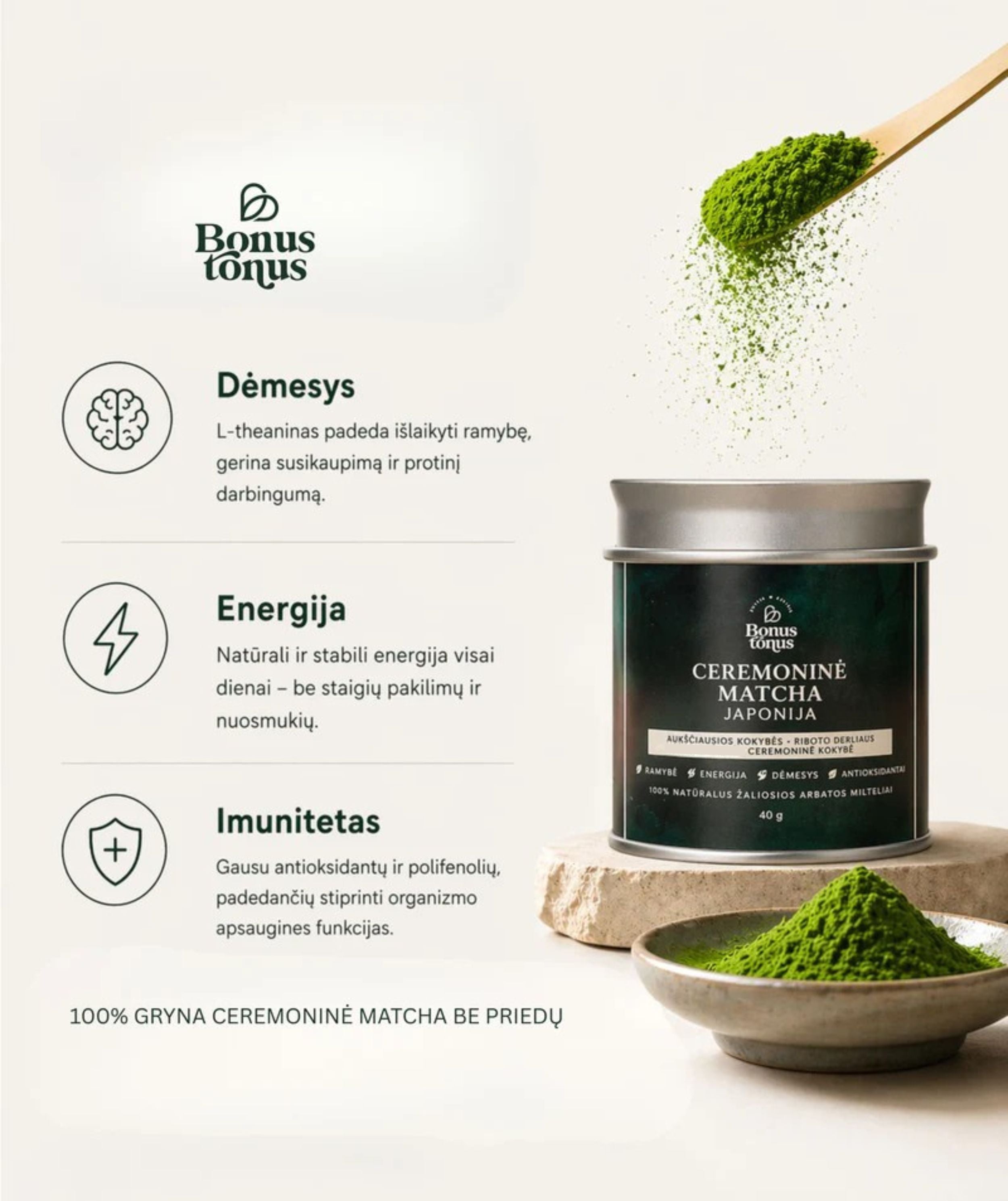
Natural caffeine and L-theanine provide a balanced sense of alertness. Caffeine helps increase alertness, improve concentration, and maintain endurance during physical exertion – making matcha perfect for days when you need sharper focus and natural, sustained energy.

Matcha naturally contains a high concentration of green tea phytochemicals, among which polyphenols and EGCG are considered some of the most significant. These compounds are widely discussed in scientific literature.

Matcha culture worldwide is associated with rituals of tranquility, mindfulness, and focus. This drink becomes a small pause between tasks, a moment just for you.

 Why people choose matcha daily:

• natural, consistent energy without sudden spikes;

• clearer, more purposeful focus;

• rich flavor, visual aesthetics, and easily frothed creamy foam;

• a moment for yourself – a small but effective ritual that combines well-being and taste pleasure.

Preparation and Recipes

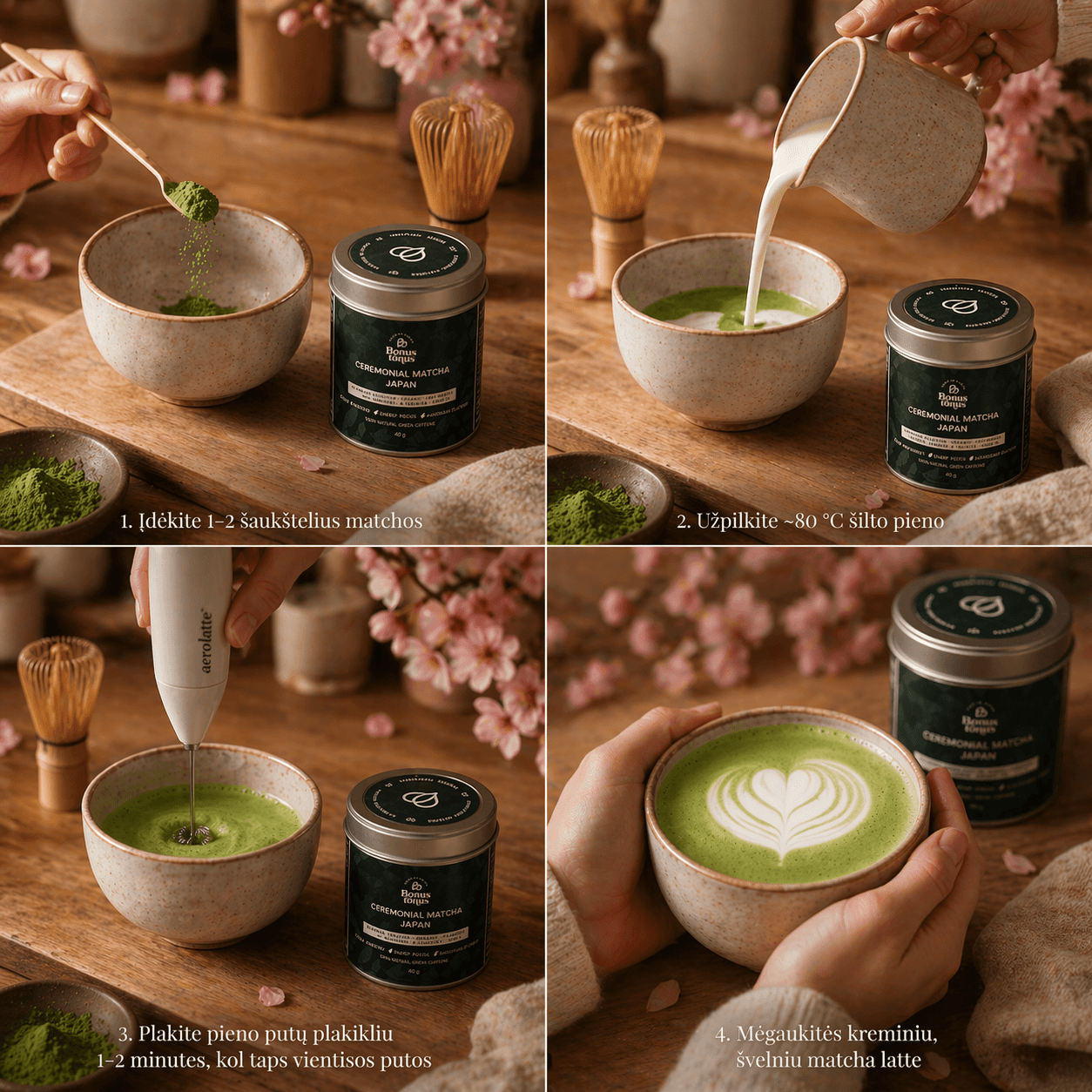
IN SHORT: Whisk a teaspoon of matcha into your desired flavored milk or water. Enjoy!

DETAILED EXPLANATION:

First, prepare a matcha shot

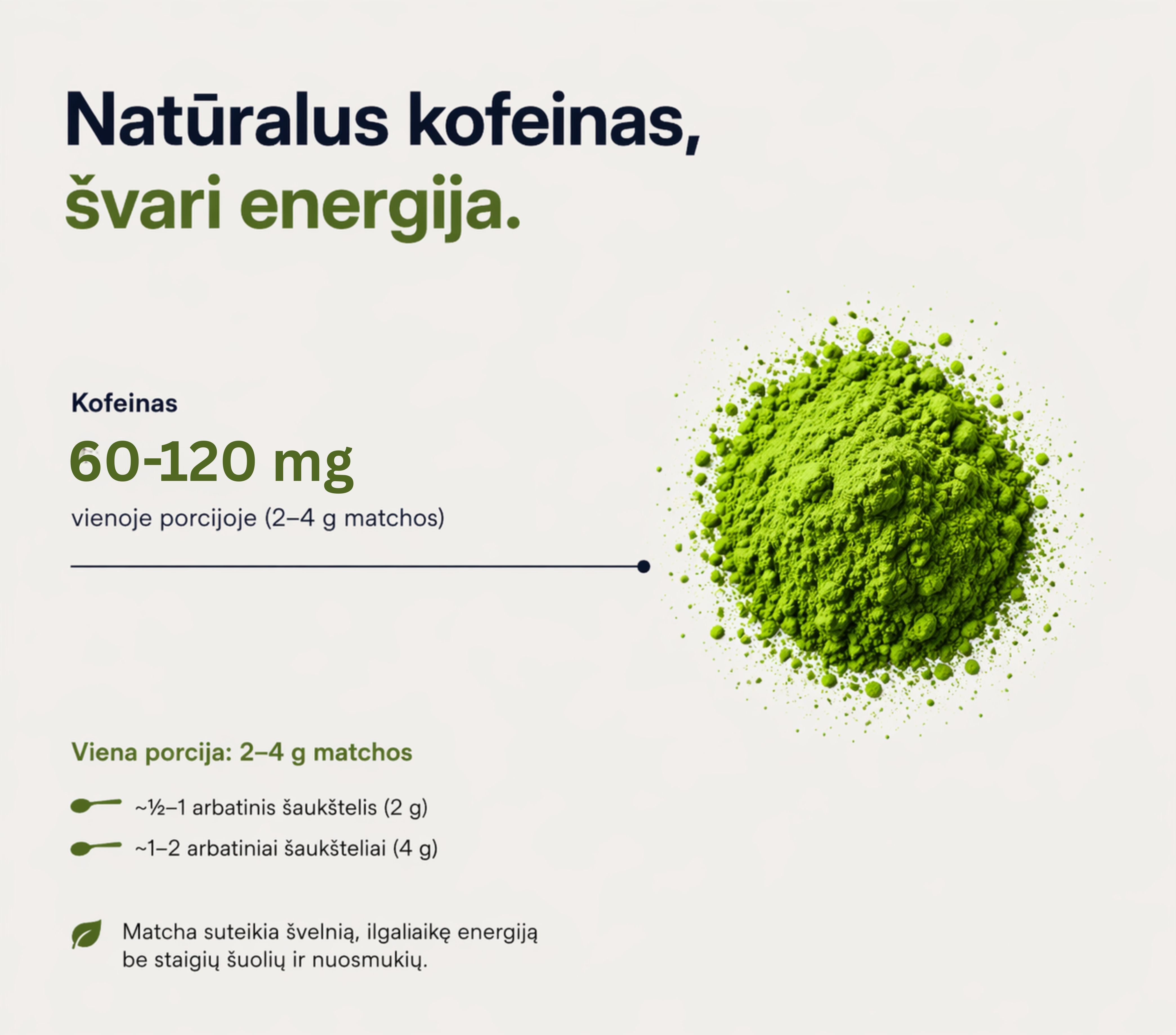
Whisk one (2g) teaspoon of matcha with 60-80 ml of hot water. Matcha simply whisks better in a smaller amount of water. The water should not be boiling, but around 70-80 C, as boiling water makes matcha bitter and destroys antioxidants. Whisking. Whisk until foam appears and only small air bubbles remain, or none at all; add a little more water if needed. If you have a Japanese Chasen whisk, get ready for a workout and whisk in a W zigzag motion. For those in a hurry but still wanting a healthy drink, a quicker option would be to whisk with a milk frother; you'll get foam in just a few seconds. For students who have neither a frother nor a whisk, an alternative is to shake it vigorously in an empty jam jar.

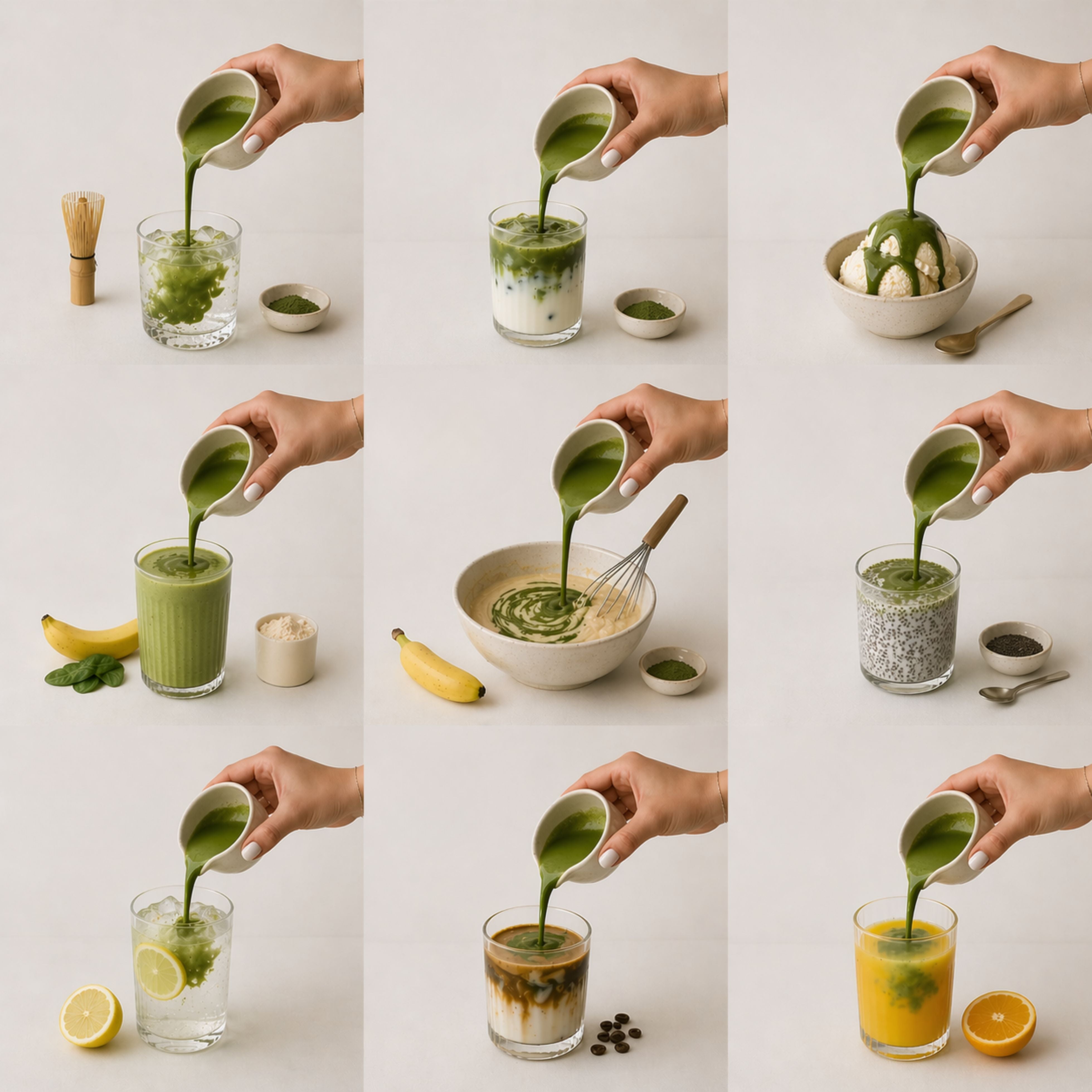
If you are a matcha expert and drink matcha like a Japanese person, simply add more water (about 240ml) to the whisked matcha. Sometimes, to vary the taste, you can add brewed tea of your desired flavor instead of plain water, although this option would not be very Japanese. Matcha + Lemon. An especially healthy version, as vitamin C / citrus juices increase the bioavailability of antioxidants in the gut and blood. Squeeze 2-3 teaspoons of lemon juice into the matcha with water.

Matcha latte version. Pour the whisked matcha shot into a cup of warm milk (about 240ml). How do you know if you've prepared your matcha latte well? Look at the color. Even when mixed with milk, the green color should be quite vibrant. Adjust it by adding more matcha or less milk.

Dessert matcha. You can't go wrong by adding a matcha shot to milk mixed with mango puree or your favorite jam. However, you will only get impressive layers when making cold matcha or with a lot of ice cubes.

Matcha lemonade. Pour the whisked matcha into your favorite lemonade or into mineral water, flavored with lemon and honey.

Matcha martini... The principle is the same.

Does matcha contain caffeine?

Matcha is also called the espresso of the tea world because one full teaspoon of matcha (2g) contains as much caffeine as one cup of espresso - 55-60 ml. However, the caffeine from matcha acts more slowly, more evenly, and more calmly, so even though you will get energy, you will remain relaxed.

It is interesting that matcha contains not only caffeine but also the amino acid L-theanine, which "softens" the caffeine rush, so there is no nervousness, sudden peak, or energy crash, and a clear focus (a feeling of concentration and creativity) lasts several hours longer.

Is matcha bitter?

Even ceremonial matcha has a natural bitter note—but it's very subtle, balanced by umami, not sharp or burning.

That's why good matcha is described as having an UMAMI taste – this is the fifth taste (alongside sweet, salty, sour, and bitter). It means a rich, full flavor that feels like a pleasant depth in the mouth. In matcha, umami provides smoothness and balances bitterness.

If you experience too much bitterness even when using good matcha, the problem is usually not the quality, but the preparation.
Try whisking matcha at a lower water temperature, using less of it (e.g., half a teaspoon instead of a full one), and whisking everything well until foamy. All of this makes the taste smooth and creamy.

Storage

Matcha should be stored in an airtight container in a dark, cool place, preferably in the refrigerator. Once opened, it is best to consume it within 1–2 months.

Cold protects matcha's color, taste, and nutrients. Matcha is rich in antioxidants, which are sensitive to light, air, and heat. If matcha is not sealed airtight, its color, taste, and quality change. When matcha oxidizes, it turns yellowish-green or even brown.

Shipping

We work with all parcel lockers, so you will receive your shipment within 1-2 business days. For any questions, please contact: info@bonustonus.lt